When buying food equipment, “manual” and “automatic” tell you something about how a machine works, but they rarely explain the whole process. You still need to know how ingredients are loaded, how the machine is controlled, and what happens to the finished product.
Instead, consider which parts of the process will happen automatically and how much your staff will need to do.
What Does “Manual” Mean?
On hand-powered equipment, the operator supplies the force that makes the mechanism work. On a hand-operated meat slicer, such as Berkel’s Flywheel collection, turning the wheel powers the blade and moves the carriage, pushing the product towards the blade according to the selected thickness. Although these movements are mechanically linked, the operator must turn the wheel to keep slicing.
“Manual” can also describe how a powered machine is controlled. On an electrically powered manual slicer, the motor turns the blade while the operator moves the carriage using its handle. The operator therefore controls each slicing pass without supplying the power that rotates the blade.
What Does “Automatic” Mean?
Automatic operation means that a particular action or sequence takes place without the operator directly controlling every movement. Depending on the machine, this could involve moving a slicer carriage, repeatedly forming portions, or running a vacuum-packing cycle.
The controls may use a timer or a sensor to determine when an action starts, stops, or moves to the next stage. Automation does not necessarily mean that the machine can complete the entire process by itself.
Always establish what the description covers. Just because one part of the process is automated (such as burger forming) does not mean that it will automatically do everything (such as packing the burgers). A machine will usually automate its main processing task while staff handle everything before and afterwards.
What Does “Semi-Automatic” Mean?
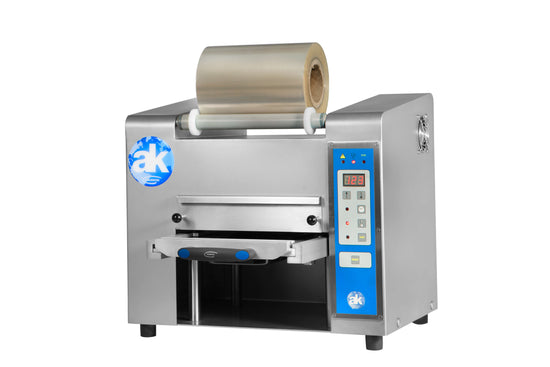
Semi-automatic equipment combines automatic operations with actions that the operator performs between or during cycles. A tray sealer, for example, may advance the film and carry out the sealing stage automatically while staff load and remove each tray, which can be seen on the semi-automatic AK-Ramon TS-200.
Semi-automatic rarely means that half of the process is automated and half relies on the operator, so always check which processes are powered.
Powered equipment can still need continuous operator control. Hydraulic sausage fillers are a prime example of this. The hydraulic system supplies the filling force, but the operator can still control delivery through a knee lever. Mainca describes its hydraulic filler range as: “Hydraulic describes how the force is produced; it does not establish whether portioning or linking happens automatically.
A machine may also have an automatic feature, while the rest of the equipment is manual. When considering these machines, find out exactly which feature is automated and whether this will assist you.
Examples
These descriptions appear across food preparation and packaging equipment:
| Things To Consider | |
|---|---|
| Slicers | Whether the operator moves the carriage or the machine moves it automatically, and whether counting or weighing portions is included. |
| Sausage fillers | How filling force is produced, how delivery is controlled, and whether portioning or linking needs separate equipment. |
| Mincers and mixer-mincers | How meat reaches the cutting mechanism, whether mixing follows a programmed cycle, and how output is collected. |
| Burger formers | Whether forming, discharge, papering and packing are included or separate operations. |
| Tray sealers | Who loads the trays, advances the film, starts the cycle, and removes finished packs. |
| Vacuum packers | Which stages the programme controls and which loading and unloading tasks remain manual. |
Manual Slicers
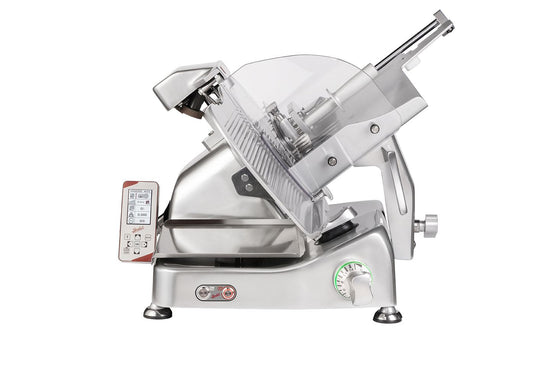
The Berkel Pro Line XS25 Gravity Slicer has an electric motor that turns the blade. The operator positions the product, secures it with the holder, selects the slice thickness, and moves the carriage using the designated handle. The blade is powered, but each slicing pass is controlled by the operator.
By contrast, the Berkel Suprema PEG 350 Auto Slicer features both manual and automatic operation. In automatic mode, a secondary motor drives the carriage back and forth on its own, and the machine can automatically stop portioning by slice count or weight.
These are specific features of this high-end model; features will vary across "automatic slicers". When comparing automatic slicers, check which movements are automated and whether counting or weighing is included.
Semi-Automatic Tray Sealers
The AK-Ramon TS-200 Tray Sealer is a semi-automatic machine which combines automatic film feed and sealing with manual loading and unloading. The operator prepares the trays, selects suitable sealing settings and handles the packs before and after the cycle.
When changing products or packaging, check whether the tray mould, film, or sealing settings also need changing. This helps establish how much work is involved in switching between jobs, as well as how quickly the machine seals each tray.
Automatic Burger Formers
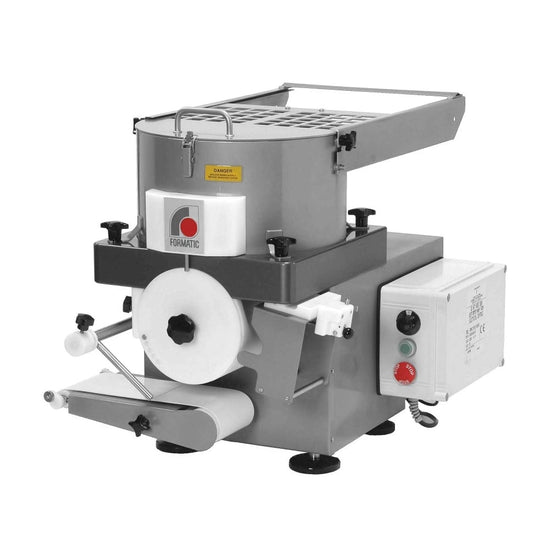
The Formatic R2200 Automatic Burger Former automates the repeated task of forming portions. Its paddles feed prepared mixture into the forming mechanism, and the formed product is released onto a conveyor for collection or further processing. Deighton explains this process in its Formatic R Series information.
Staff still need to arrange ingredient preparation, machine setup, hopper replenishment, product checks, and packing. Check portion weight as well as appearance: selecting a shape and thickness does not remove the need to confirm that the finished product meets your requirements.
Compare the advertised forming rate with the rate at which your team can finish the complete job. Refilling, collecting, packing, and cleaning all affect practical output.
Automatic Cycle vs Automatic Loading
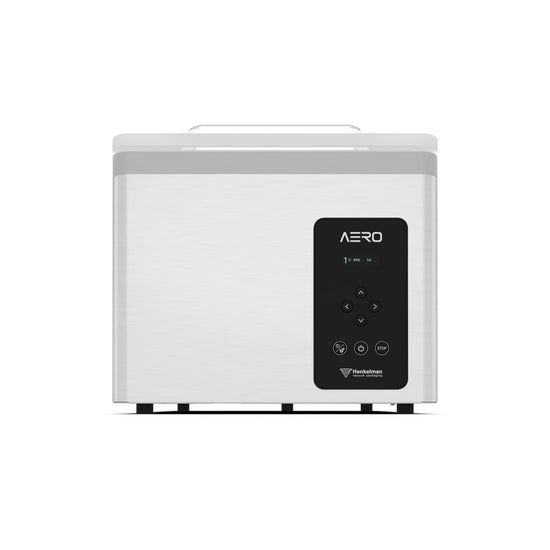
The Henkelman Aero 42XL Vacuum Packer illustrates the difference between an automated cycle and automated loading. The operator fills the pouch, positions its open end across the seal bar, and selects a suitable programme. Closing the lid starts the packing cycle.
Sensor control monitors the vacuum level. Sealing time and any additional functions follow their own programme settings. After sealing, air returns to the chamber and the lid opens. The operator then removes and checks the pack.
A vacuum packer can run its internal cycle completely automatically, while every single pouch is still loaded, aligned, and removed entirely by hand.
- Operator: Prepare the pouch and position its opening on the seal bar.
- Operator: Select the programme and close the lid.
- Machine: Run the selected cycle, restore chamber pressure, and open the lid.
- Operator: Remove and check the finished pack.
Which Arrangement Suits Your Working Day?
Consider which part of production you want to improve. If staff spend long periods repeating the same movement, automating that action may reduce effort and make the work easier to sustain. If most orders involve small quantities and frequent product changes, straightforward loading and adjustment may matter more than the highest processing rate.
For example, a deli slicing a few portions to order has a different working pattern from a producer preparing a large batch of the same product. Compare equipment against your normal orders and busiest periods.
Ask for a demonstration that includes setup, loading, processing, collection, and cleaning. Where possible, use your own product or a representative equivalent. Record both the time taken and the number of people involved.
What Automation Does Not Remove
The word “automatic” does not tell you what supervision a machine requires. Follow the manufacturer’s instructions and your business’s safe working procedures.
Operators need to understand the controls, recognise problems and know how to stop the machine safely. Cleaning and maintenance must follow the specified procedures, with servicing and repairs carried out by people competent to do that work.
When considering equipment, check:
- Which specific physical movements or stages are automatic?
- What exactly does the operator physically do during every single cycle?
- How are raw ingredients loaded, and how are finished products removed?
- Which automation features are standard, and which require optional accessories (like auto-papering on a burger former)?
- What parts need to be physically changed between different products, portion sizes, or packaging formats?
- What cleaning, operator training, maintenance, and specific electrical/utility requirements should be allowed for?