Chamber vacuum packers commonly use either time control or sensor control.
A time-controlled machine will work strictly to a set time limit, stopping the vacuuming process once the time is up. Sensor-controlled machines rely on a built-in sensor that measures the internal pressure. This machine will only stop the vacuuming process once the chosen vacuum percentage is reached.
The most suitable controls depend on what you pack and how your workload changes throughout the day.
How Do Vacuum Packers Work?
To understand the difference in controls, it is important to understand how vacuum packers work:
- Place the filled pouch inside the vacuum chamber, laying its open end flat across the seal bar.
- Close the lid. This triggers the pump to begin removing air from both the chamber and the open pouch simultaneously.
- The machine completes the vacuum stage and then applies heat to seal the pouch.
- After sealing, air returns to the chamber. The rising pressure presses the pouch around the product. Machines with Soft Air return the air gradually, helping the pouch settle around delicate products or sharp edges.
Vacuum time and sealing time are separate stages. The vacuum setting controls the air removal, while sealing time determines how long the sealing wire heats the pouch material.
If a seal is weak, check the pouch position, sealing settings, and condition of the sealing components. Increasing the vacuum time is not a general remedy for a sealing problem.
How Does Operator Responsibility Change
With either system, the operator chooses suitable settings, loads the pouches, and checks the finished packs. The difference is how the vacuum stage is controlled: one works to a set time, while the other works towards a selected vacuum level.
| Question | Time-Controlled | Sensor-Controlled |
|---|---|---|
| What does the operator set? | The vacuuming duration, measured in seconds. | A target vacuum level, usually shown as a percentage. |
| When does the vacuum stage end? | When the programmed time expires. | When the pressure sensor detects the target vacuum has been reached. |
| What happens when the load size changes? | The operator must manually check whether the existing time still produces a tight pack. | The machine adapts to different products as the machine works towards the percentage target. |
| Does the operator still choose settings? | Yes. | Yes. The sensor does not automatically identify the meat or guess its ideal settings. |
Both timed and sensor-controlled machines may offer programme memory, allowing staff to save settings for regular packing jobs.
Everyday Examples
Packing One Large Joint
A very large joint does not automatically need a longer vacuum time than a smaller portion. In the same chamber, a larger product occupies more space and leaves less free air to remove. However, product size alone does not determine the time needed.
Insert plates can also reduce the chamber space that needs evacuating. They raise the product towards the seal bar and can shorten the vacuum stage.
Packing Several Small Portions
If you are packing four individually bagged steaks in a single cycle, the machine still evacuates the chamber as a single enclosed space. Packing four small pouches does not mean multiplying your vacuum time by four, as it does not treat each individual pouch separately.
On a timed machine, check whether the existing vacuum time still suits the new load. On a sensor-controlled machine, the vacuum stage can take more or less time as the machine works towards the selected target.
Changing Products Throughout the Day
If you shift from a firm, dense meat to a delicate product containing a wet marinade, the sensor control automatically accommodates changes in physical load volume. However, you will still need to consider the changing type of product.
Changing from a beef joint to a product in marinade will require different settings. A high vacuum can affect the shape of delicate products, while moisture may begin to boil. Saved programmes make it easier to switch products and quickly use settings that you know will suit the product.
What Is Liquid Control?
If you regularly pack soups, sauces, or products in marinade, it helps to understand the difference between pressure sensor control and liquid control.
Pressure sensor control monitors the vacuum level in the chamber. Liquid control detects when moisture begins to boil under reduced pressure.
As pressure falls, liquids boil at lower temperatures. Boiling can cause liquid to rise towards the pouch opening, contaminate the sealing area, or spill into the chamber.
When boiling is detected, liquid control moves the machine to the next stage of vacuuming, helping reduce these problems. This may happen before the original vacuum target is reached.
Which Controls Suit Your Work?
Time control may suit your operation if:
- Your products and batch sizes are fairly consistent.
- Staff are trained to establish and monitor suitable time settings.
- A straightforward control panel meets the business’s needs.
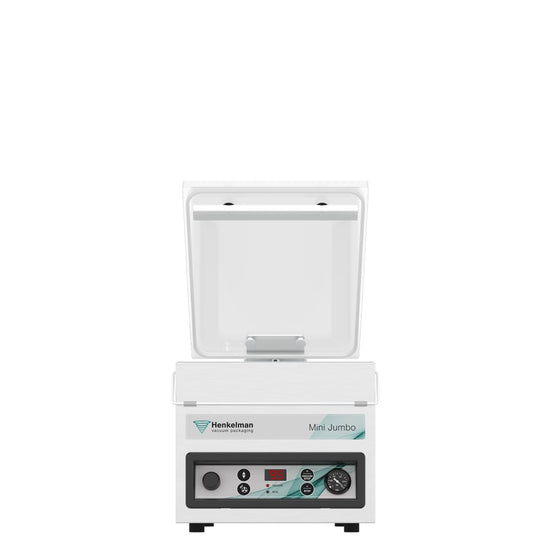
The Henkelman Mini Jumbo is an example of a compact, time-controlled chamber machine. Its one-programme control panel lets the operator set vacuuming and sealing times separately. Whether it suits your business also depends on pouch size and how frequently you need to pack.
Sensor control is worth considering if:
- Your chamber loads vary frequently throughout the day.
- Staff want the reassurance of the machine adapting to reach a specific, guaranteed vacuum percentage.
- Checking and adjusting vacuum times for changing loads takes up staff time.
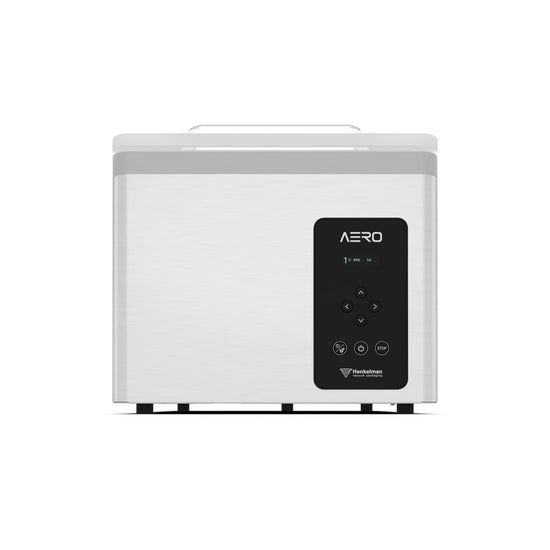
The Henkelman Aero 42XL has sensor pressure control and three adjustable programmes. Operators can save settings for regular jobs, while the sensor determines when the selected vacuum level has been reached. H2O Liquid Sensor Control is available as an additional option for businesses packing liquids or products containing moisture.
Investing in the Perfect Vacuum Packer
Whichever control system you choose, successful packing still depends on the basics:
- Pouches: Choose bags suited to the product, machine and intended use.
- Loading: Keep the sealing area clean and dry, and position the pouch opening flat across the seal bar.
- Sealing: Use settings suitable for the pouch material and check finished packs for wrinkles, contamination, incomplete seals or damage.
- Maintenance: Follow the machine’s cleaning, servicing and pump-maintenance instructions.
Reaching a vacuum target does not establish a product’s shelf life. Chilled vacuum-packed foods still need suitable hygiene, temperature and shelf-life controls. Use the FSA’s vacuum packaging guidance when developing the relevant food-safety procedures.
When comparing commercial vacuum packers, consider the products that you pack, your largest pouch dimensions, and how much you need to process during your busiest time. If you need assistance, contact our team with this information to match the right control system to your workload.