A cutting surface needs to stay secure during use, suit the work, and withstand a regular cleaning routine. Wooden butcher’s blocks and polyethylene polytops are the two most common options.
The right option depends on what you prepare, how you cut it, and how you'll clean and maintain the surface. This guide compares the practical considerations, from workstation stability and knife care to wear and replacement.
What Is the Difference Between a Butcher’s Block and a Polytop?

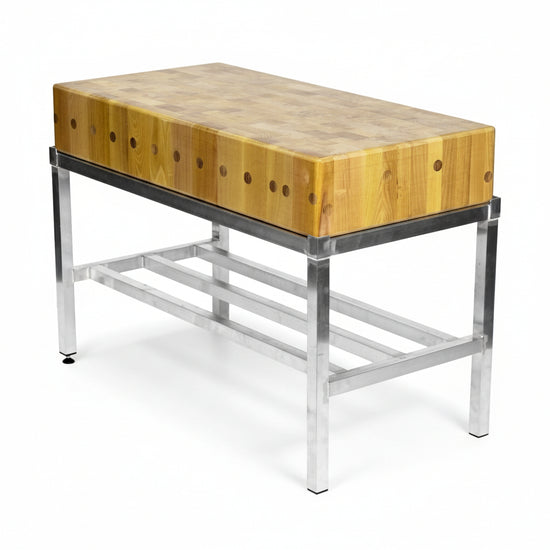
Wooden butcher’s blocks are heavy-duty cutting surfaces designed for demanding preparation work. Their construction varies, including the timber used, block thickness, and grain arrangement. Traditional end-grain blocks have the ends of the wood fibres facing upwards.

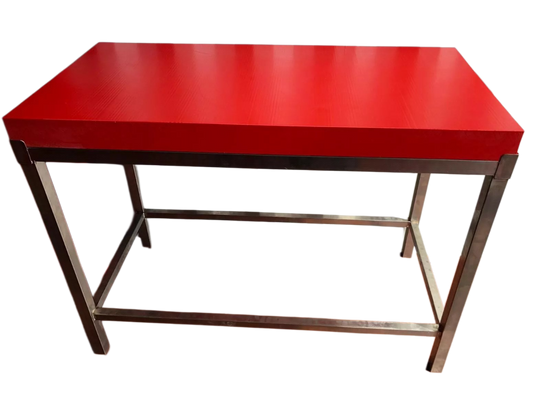
Polytops are polyethylene cutting tops used on preparation benches or supporting frames. Our polytops are made from high-density polyethylene, or HDPE, and are available in different sizes and thicknesses, with an optional frame.
Consider Your Daily Work
While both prep surfaces are very popular, they are better suited for different products and prep tasks. When comparing the two, first consider your daily work.
| Preparation Task | Things to consider |
|---|---|
| Heavy chopping or cleaver work | Whether the complete block (or polytop) and its stand are designed for repeated heavy impact. Check construction, thickness, and absolute stability. |
| Boning, trimming, and portioning | Sufficient working area, secure support for the meat, comfortable operator reach, and predictable knife contact. |
| Preparing burgers, sausages, or marinades | Space for holding ingredients and equipment, ease of residue removal, and efficient cleaning between different recipes. |
| Slicing cooked meat (Ready-to-Eat) | A properly separated physical preparation arrangement and suitable cleaning procedures. Material choice alone does not control contamination. |
| Mixed kitchen preparation | How staff visually identify different work areas, change tasks, and manage entirely separate boards or surfaces. |
A wooden block is very suited to a dedicated chopping station, particularly where the manufacturer specifies it for repeated cleaver work. A polytop may suit a preparation bench used for trimming and portioning, provided its thickness and support are appropriate for the workload.
When choosing which is better suited for you, start by considering which tasks the station must handle. Do not assume that every wooden block is suitable for heavy chopping, or that every polytop can withstand the same cleaning methods.
Stability, Working Height, and Support
Stability comes from the whole workstation, including the top, its frame, the feet, and the floor beneath it. A heavy top does not compensate for an unsuitable stand. The top, frame, and feet should remain secure during the intended work, without rocking or shifting.
When evaluating a prep station, ask:
- Does the top stay secure during the cutting or chopping tasks it is designed to handle?
- Is the frame suitable for the top’s dimensions, weight, and intended workload?
- Is the surface level, or does it rock?
- Can the operator work comfortably without bending down or reaching?
- Is there enough room to support the whole product being broken down?
- Can staff easily access the edges and the underside for daily cleaning?
The Health and Safety Executive (HSE) identifies a stable cutting surface as a fundamental knife-safety measure.
Check how the top will be lifted, removed or turned for cleaning. Large wooden and polyethylene tops can be heavy and awkward to grip. Assess the task before handling them, including the weight, available space and lifting position. Use suitable handling equipment or a planned team lift where the assessment identifies this as appropriate.
How Does the Surface Affect Your Knives?
Cutting-board material directly affects blade performance. Both suitable wooden and plastic cutting surfaces are established, safe options for professional knife work. Victorinox recommends both wooden and high-quality plastic boards for their professional knives, actively advising against cutting on hard stone, glass, or steel surfaces.
However, material is only one factor. Knife condition, operator technique, and the food being cut also dictate performance. Surface damage changes how food rests on the board and how consistently the knife moves across it, leading to unpredictable cuts and slips.
Crucially, repeatedly dragging the sharp cutting edge sideways across any surface to clear debris will rapidly dull the blade. Use a polytop cleaning scraper to move meat debris, preserving your blade edges for cutting.
Which Is More Hygienic?
Neither material is more hygienic. A surface should be judged by whether it remains suitable for its intended use and whether it can be cleaned and disinfected effectively.
Legislation specifies that a food-contact surface should be smooth, washable, corrosion-resistant and non-toxic. However, other materials can be used if they can be demonstrated as appropriate.
Wood is therefore not automatically unsuitable, but a particular block must remain suitable for its intended use and cleaning. Just because a product is advertised as appropriate does not remove the business’s responsibility to maintain it properly.
To maintain good hygiene in your professional kitchen, use clearly identified equipment for raw and ready-to-eat preparation, with storage and cleaning arrangements that prevent cross-contamination. Colour coding can help staff identify equipment, but it must be used alongside cleaning and disinfection.
Turning a block over does not make a separate, hygienic preparation area. The underside, edges, hands and supporting frame may also have been contaminated.
Cleaning
Removing visible food residue is not the same as disinfection. A surface that looks clean to the naked eye has not necessarily received the complete treatment required by your food safety procedures.
Follow a written cleaning procedure that is suitable for the surface and the work carried out:
- Remove food and loose debris.
- Clean away grease and remaining residue.
- Remove cleaning residues.
- Apply a disinfectant to the cleaned surface, using the specified dilution and leaving it for the full contact time.
- Complete any required final rinse.
- Dry the surface in a way that avoids recontamination.
If using a combined detergent-disinfectant sanitiser, use it first to clean and then apply it again for disinfection, following its instructions.
For Wood
Prolonged moisture exposure can damage a wooden block. Avoid soaking it or leaving it standing in water, and follow the manufacturer’s cleaning and drying instructions. You must check that your cleaning chemicals are compatible, and strictly follow the manufacturer’s instructions. For example, Mej’s care guidance strictly advises against using abrasive wire brushes and certain aggressive chemicals on its wooden products.
For an oiled wooden surface, apply the manufacturer’s recommended food-contact treatment at the advised intervals. Oiling helps maintain the wood; it is not a cleaning or disinfection process.
For Polytops
Inspect the cutting face to ensure it fits on the supporting frame. Check for deep cuts, distortion, loose material, and areas that are becoming difficult to clean. Always follow the supplier’s limits for cleaning chemicals and temperatures.
Do not assume a polyethylene top is dishwasher-safe. Confirm that the particular product is suitable for the washing process, including the temperature, cycle, and size of the machine.
Ongoing Maintenance
Wooden Blocks
Maintenance involves inspecting the working face, joints, and supporting structure daily. You must follow the manufacturer’s instructions for applying food-contact oils or treatments to prevent the wood from drying and cracking.
Take a top out of use if damage prevents effective cleaning or makes cutting unstable. Some blocks may be suitable for resurfacing, but this must leave an even and cleanable surface. It does not automatically resolve cracks, separated joints or other structural damage. Where restoration is not possible, replace the top.
Polytops
Focus on daily surface inspection and ensuring secure fitting on the frame. Confirm with your supplier whether resurfacing (skimming) is an approved option for your specific thickness of top before attempting it.
For both materials, distinguish routine surface scraping from professional resurfacing. Neither turning the top over nor scrubbing superficial marks will resolve underlying structural damage or uncleanable gouges.
When Should You Repair or Replace the Surface?
Use the following checks to identify defects that need attention. If the surface cannot be used safely or cleaned effectively, stop using it until it has been assessed.
| Sign of damage | How to fix it |
|---|---|
| Deep cuts, grooves, or pitting | Remove the top from use. Establish whether approved resurfacing is possible. If not, replace it. |
| Cracks, open joints, splinters or loose fragments | Stop using the affected surface and arrange assessment. Do not assume sanding will resolve the defect. |
| A rocking stand or top that shifts during work | Stop using the station until its support or fittings have been corrected. |
| Significant unevenness or distortion | Assess whether the top can still support food securely and be cleaned effectively. |
| Persistent residue or odour after the normal cleaning process | Investigate the cleaning method and surface condition before returning it to use. |
| Discolouration without obvious damage | Check the condition and cleaning process; colour alone does not establish whether the surface is safe. |
Staining does not mean that a surface is unsafe, just as a clean-looking surface is not proof of no contamination.
Choosing the Right Surface
Different stations within one business may reasonably require different surfaces. Choose the surface around the work it needs to do, the space available and the cleaning arrangements your team can maintain. A wooden block may suit a dedicated chopping station, while a polytop may suit a larger preparation bench. In either case, confirm the specification, supporting frame and maintenance requirements before ordering.
Contact the SMS Food team with your preparation tasks, available dimensions and preferred working height. We can help you compare suitable tops and frames for your prep room.