Vacuum packing is essential for many kitchens and butchers. However, different ingredients and products will require different levels of vacuum packing and gas flushing.
Modified Atmosphere Packaging (MAP) and gas flushing are powerful preservation tools, but their effectiveness depends entirely on your packaging and food-safety process.
What Is Modified Atmosphere Packaging?
Modified Atmosphere Packaging (MAP) is when the atmosphere surrounding the food inside its packaging is deliberately changed. For the gas-flushing systems used by butchers and food producers, this involves extracting ordinary air and replacing it with a carefully selected, food-grade gas or mixture of gases.
When researching MAP, you will encounter three core terms:
- Modified atmosphere: The altered, carefully controlled mixture of gases now surrounding the food.
- Gas flushing: The mechanical process of introducing that selected gas or mixture into the packaging to replace the original air.
- Headspace: The physical volume of space occupied by the gas around the food inside the sealed pack.
When executed correctly, MAP can help slow spoilage, manage oxidation, and preserve the presentation of delicate foods that would otherwise be crushed by a tight vacuum.
MAP vs Ordinary Vacuum Packing
While both methods remove the oxygenated air from around the products, their final results look and perform very differently.
In ordinary vacuum packing, the air is completely extracted before sealing. MAP then replaces the air with a gas mixture. Instead of the vacuum pouch fitting tightly around the food in regular vacuum packing, the pouch has a protective, gas-filled space (headspace) around the food.
MAP can be very useful where a tight vacuum would ruin presentation, such as crushing delicate pastries or fresh fruit. However, MAP does not automatically perform "better" than standard vacuum packing. Ordinary vacuum packing may already perfectly meet your needs for solid, robust cuts of meat.
How Does Gas Flushing Work?
- Load the product: Place the food in a pouch and position its opening perfectly flat across the seal bar.
- Remove air: The lid closes, and the machine's pump removes the air from the entire chamber, including the inside of the open pouch.
- Introduce the selected gas: The gas-flushing system injects the gas mixture into the chamber and pouch to achieve the desired pressure and volume.
- Seal the pouch: The hot seal bar clamps down, sealing the modified atmosphere inside the pouch.
- Restore chamber pressure: Ambient air returns to the chamber outside the sealed pouch, equalising the pressure so the lid can open.
Gas-flushing is not the same as Soft Air. Gas flushing introduces a protective gas inside the pouch before it seals. Soft Air simply controls how slowly the air returns to the chamber after sealing to stop sharp bones puncturing the bag.
Which Gases Are Used in MAP?
Gas flushing does not use one universal gas. A supplier will usually provide a mixture of three primary food-grade gases, tailored to your product.
| Gas | Main use | Limitations |
|---|---|---|
| Carbon dioxide (CO₂) | Highly effective at inhibiting the growth of certain spoilage bacteria and moulds. | It can dissolve into the moisture and fat of the food, potentially adding a slightly sour flavour or causing the pack to physically collapse inward as the gas is absorbed. |
| Nitrogen (N₂) | A completely inert filler gas. Used to displace oxygen and maintain the physical volume (headspace) of the pack to prevent crushing. | It does not sterilise the food or actively fight bacteria. |
| Oxygen (O₂) | Used deliberately in some specific applications, most notably to maintain the bright red, fresh appearance of certain raw meats. | It actively supports oxidation, fat rancidity, and the rapid growth of aerobic spoilage microorganisms. |
Why Does the Gas Mixture Depend on the Food?
All products, regardless of whether they are made from the same meat, may require different gas combinations:
- Fresh red meat: Maintaining a bright red appearance may be the primary retail priority, so an oxygen-rich atmosphere is best (although oxygen will increase spoilage rates).
- Cooked sliced meat: Oxygen here will cause grey discoloration and rancidity, so the atmosphere typically relies on Nitrogen and CO₂.
- Dry snacks: Moisture control, oxidation prevention, and physical protection from crushing are the main concerns, heavily favouring pure Nitrogen.
What Equipment Do You Need?
There are two primary equipment routes for implementing MAP in your food processing business: a vacuum packer or a tray sealer.
Vacuum Packers with a Gas-Flush Option
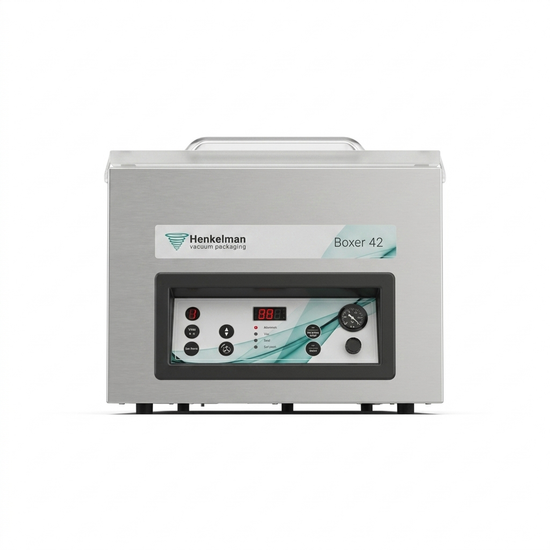
You need a machine physically fitted with the relevant gas-injection nozzles, internal piping, and software controls. Gas flushing is not standard on every vacuum packer. For example, when ordering a machine like the Henkelman Boxer 42, you must specify that you require the gas-flush option installed at the factory. You cannot simply plug a gas cylinder into a standard machine.
Pumping high levels of oxygen is highly combustible. Henkelman specifies a special oxygen-safe pump configuration for mixtures containing more than 20% oxygen.
Tray Sealers Configured for MAP
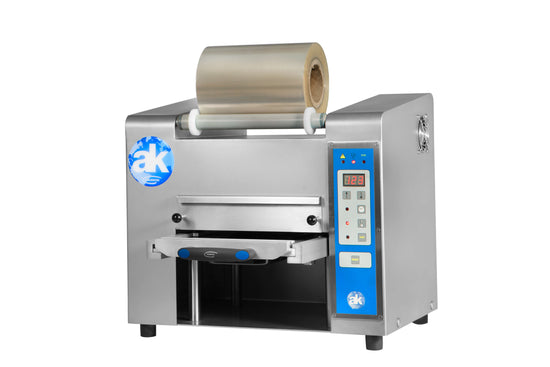
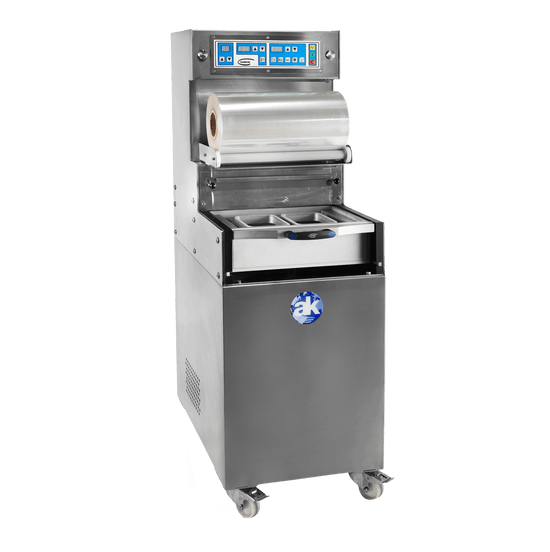
These machines package food in rigid plastic trays sealed with a top film. Standard tray sealers simply apply heat to seal the film.
However, advanced models, like specific configurations of the AK-Ramon TS-200 and AK-Ramon TS-550, feature full vacuum and gas-flushing functions to extract the air from the tray and replace it with gas before sealing.
You must also account for the supporting requirements: a secure supply of food-grade gas cylinders, highly specific regulators, compatible hoses, adequate ventilation, and strict operator safety training.
Why the Packaging Material Matters
Buying an expensive gas-flushing machine does not establish a working MAP system by itself. If you pump a protective gas into a cheap, porous bag, the gas will simply leak out through the microscopic pores of the plastic within hours.
- Barrier properties: The pouch, tray, and lidding film must be specifically manufactured with high-barrier layers (like EVOH) to prevent gas from escaping and ambient oxygen from entering. Thickness alone does not dictate barrier performance.
- Sealing compatibility: The film and tray must melt together perfectly under your machine’s specific heat settings.
- Pack integrity: Punctures, wrinkles, or meat juices in the seal area will instantly undermine the modified atmosphere.
- Headspace volume: The physical amount of gas relative to the volume of the product must be calculated correctly.
Does MAP Extend Safe Shelf Life?
MAP does not provide an automatic or universal shelf-life extension. Preserving food quality (colour, flavour, texture) and food safety are completely different.
Slowing down visible spoilage (like mould or greying meat) does not prove a product is safe to eat. In fact, removing oxygen can create perfect conditions for dangerous anaerobic pathogens to thrive undetected, such as Clostridium botulinum.
Under Food Standards Agency (FSA) guidance, chilled vacuum or MAP foods stored correctly have a maximum 10-day shelf life. While there is a specific exemption to this 10-day rule for whole, uncut fresh beef, lamb, and pork, this exemption does not extend to meat that has been minced, cooked, or mixed with ingredients like seasonings.
Read our guide on how to determine a safe use-by date for more information.
Checks and Labelling Does MAP Require?
You must conduct daily quality control to ensure that your products are being safely produced; this must include checking:
- The correct gas supply cylinder is connected and flowing at the correct pressure.
- Seal condition and packaging damage.
- Gas composition in the finished packs.
- Product chill temperatures and batch traceability.
If you use MAP, you must also adhere to specific retail labelling laws. Alongside your standard ingredients, allergens, and use-by dates, the label must prominently feature the exact wording: "Packaged in a protective atmosphere."
Is MAP Right for Your Business?
Before investing in MAP technology, map out your exact requirements:
- What specific products are you trying to pack, and what shelf-life problem are you trying to solve?
- Do your customers prefer the look of flexible pouches or rigid retail trays?
- What are your maximum daily production volumes?
- Do you have the physical space for large gas cylinders and the budget for continuous consumable costs, laboratory shelf-life testing, and daily headspace analysis?
If you are considering upgrading your packaging process, contact the SMS Food technical team. Tell us your product type, your pack dimensions, and your expected daily output, and we can help you configure the correct vacuum packer or tray sealer for your operation.