If you’re introducing organic meat or products to your shop, there is more to consider than finding an organic supplier. What does organic mean, and when can you use it to label your own products?
Buying certified organic meat is a starting point. Before selling products you make from it as organic, you also need to check your other ingredients, preparation methods, and certification requirements.
What Does “Organic” Actually Mean?
Organic production is a regulated system of farming and food production. It covers exactly how ingredients are produced and how those products are handled throughout the entire supply chain. These rules address environmental protection, the use of natural resources and animal welfare, as well as how ingredients and finished products are managed.
For a butcher, the organic standards cover three stages of your products:
- Livestock: Rules cover feed, housing, outdoor access and animal health and welfare.
- Crops: Rules restrict fertilisers and pesticides used when growing ingredients such as cereals, herbs and spices.
- Processing: Rules limit which additives and processing aids can be used.
Terms like "local", "free-range", “chemical-free", and "grass-fed" do not mean that a product is organic. Organic standards restrict inputs, rather than guaranteeing that no substances have been used.
What Is Organic Certification?
An organic control body (such as Soil Association Certification, Organic Farmers & Growers, or the Organic Food Federation) is responsible for checking a business’s activities, inspecting its systems, and certifying the operation and products.
Whether your shop requires its own certification depends entirely on what you do with the organic food:
| What the Shop Does | The Certification Requirement |
|---|---|
| Resells a supplier’s sealed, certified organic packs directly to customers. | A retail exemption may apply, provided the packaging remains sealed and unchanged. |
| Makes sausages, burgers, or other organic products in its preparation area. | The business must obtain organic certification covering its processing activity. |
| Cuts, repacks, or relabels raw organic meat. | Describe the exact operation to a control body before assuming a retail exemption applies, especially if altering the product. |
| Expands into online selling, wholesale supply, or contracted processing. | Recheck your certification position before expanding, as exemptions are highly restricted. |
You must tell a control body exactly what happens in your shop, including cutting, packing, and storage, so they can confirm which activities legally require certification.
The 95% Rule
To label processed foods, such as sausages or burgers, as organic, at least 95% of their agricultural ingredients must be organic. This is measured by weight, and neither water nor salt is included in this calculation. The recipe must also meet the other organic requirements, including restrictions on non-organic ingredients, additives, and processing aids.
This calculation is separate from the meat-content percentage shown on the label, known as a quantitative ingredient declaration, or QUID.
A recipe review must consider the meat, rusk, herbs, spices, and marinades. If you are using compound ingredients, such as pre-mixed seasoning blends, you must read the supplier specifications rather than assuming. You must also ask your control body to check your casings, curing ingredients, additives, and processing aids as part of the complete formulation.
What If Only Some Ingredients Are Organic?
If a recipe falls below the 95% threshold, “made with organic meat” is not an alternative claim for the product name or counter ticket. For this type of product, organic references are restricted to the ingredients list, subject to certification and the other applicable rules.
The list must identify the organic ingredients and state their total percentage of the agricultural ingredients. Ask your control body whether an ingredient-list claim is permitted and exactly how it must appear.
What Needs to Appear on the Label?
When designing your label, you must include mandatory organic information alongside your standard food-labelling requirements.
For prepacked products sold as organic, check the control body code, identification of organic ingredients, and an agricultural-origin statement alongside the usual food information. The origin statement describes where the agricultural ingredients were produced.
A certification logo, such as the Soil Association symbol, can only be used under that organisation’s conditions.
Keeping Organic Products Identifiable in a Mixed Butchery
You can handle both organic and conventional products in the same prep room, but it requires strict separation to prevent mixing or substitution.
Organic and conventional products can be made on shared equipment if there is effective cleaning, separation, and records. Dedicated equipment is not automatically required.
For example, a shop could make its organic sausages first thing in the morning, following a daily deep clean. Clearly labelled ingredients and trays would help staff keep the batch separate.
This must be supported by paperwork outlining:
- Supplier certificates and product schedules.
- Delivery quantities and batch references.
- Recipe and production records.
- Stock, sales, and wastage records.
- Documented evidence of cleaning and separation.
Check that each supplier’s organic certificate is current and that its product schedule covers the ingredients you buy. Keep these documents with delivery and production records so you can trace ingredients through to the finished batch. These records allow the business to trace organic meat and account for exactly what was produced and sold. Maintain your allergen and Food Hygiene controls completely alongside these records.
Equipment
Processing an organic range safely relies on your ability to clean equipment thoroughly between batches and label finished products accurately.
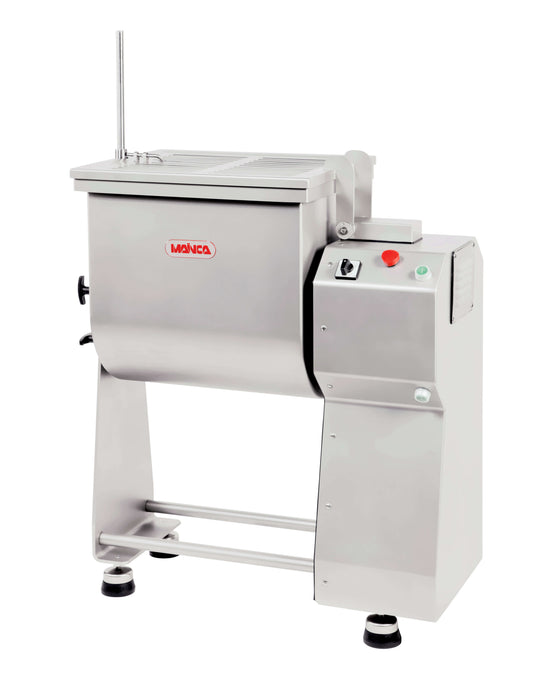
Some equipment, such as the Mainca RC100 Kneader Meat Mixer, will feature removable components that allow for easier access to the whole machine for deep cleaning. Choosing a mixer with removable paddles or a tilting bowl will reduce the risk of cross-contamination when cleaning between recipes.
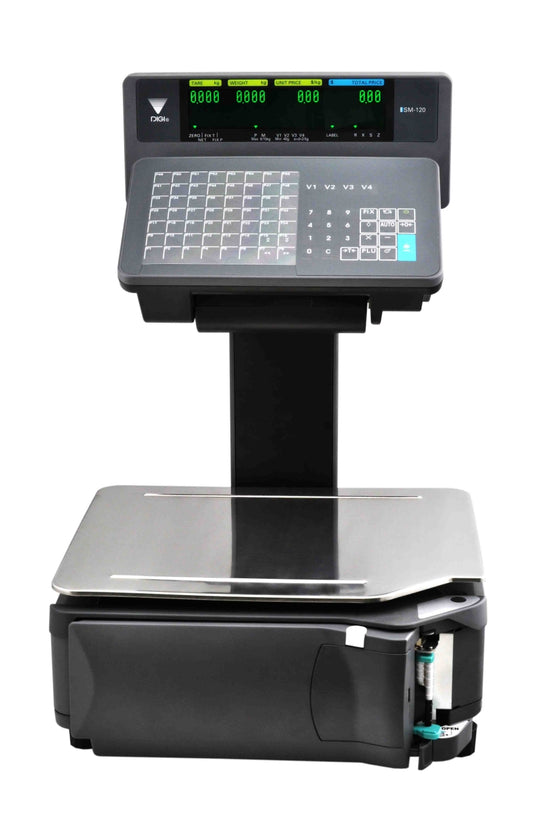
Using high-quality weighing scales and labels will ensure that your products are presented clearly. A scale such as the Digi SM-120LL features a printer, allowing you to print ingredient lists and origin statements seamlessly with the product. However, check that your chosen layout displays the product information clearly and legibly.
When planning an organic range, consider how your staff will physically clean the equipment between batches and how they will print the correct compliance data. Our team can help you compare machinery designed specifically for those daily tasks.