Supplying a local restaurant or pub can be a great next step for a growing butcher’s shop. However, before investing in new business ventures, you must check whether your existing food business registration is sufficient.
Preparing meat for other businesses can bring additional requirements, even if your premises and equipment stay the same. Whether approval is needed depends on your activities, customers, and supply arrangements.
When Do You Need Registration or Approval?
These two terms are often confused, but they describe two distinct legal processes. Approval is not simply a "higher tier" of registration. You must assess the exact requirements of your business to ensure you have the correct one.
Registration
All businesses that sell, cook, store, or distribute food must register with your local authority.
You do not need to have a specific premises for your food production. This registration applies to businesses trading from a home, mobile unit, temporary stall/van, or an online business. Therefore, any butcher shop that sells directly to the public must register. If you operate from several sites, check the registration or approval requirements for each one.
Generally, this should be completed at least 28 days before a new food business starts trading. Keep your local authority informed of significant changes to the business. Before adding wholesale supply, opening another production site or changing your activities, ask whether your existing registration remains appropriate.
Approval
In England and Wales, approval by the Food Standards Agency (FSA) is required for wholesale meat markets, cutting plants, slaughterhouses and game handling establishments. Approval can be provided by your local authority for a range of preparation establishments, processing plants, and packing centres.
Approval will involve a rigorous assessment of your premises (equipment and infrastructure), HACCP plan, and hygiene standards against specific requirements for your proposed activities. You must apply and be approved before the business can carry out any of these activities legally.
You can find exactly how to apply for approval for your specific business through this page. If your business is refused approval, you do have a right to appeal the decision.
If your products, customer base, or production arrangements change, you must check whether your current status still legally fits your business.

Supplying Other Businesses
The law treats supplying the final consumer very differently from supplying another food business. A final consumer is a customer buying food to personally cook at home. This can be online, in-person, or via delivery apps. Wholesale or B2B (business to business) involves supplying a business that will then sell the product themselves. This could be a pub/resturant, or a local farm shop.
Restaurants and caterers can count as retail establishments for the purposes of the retail exemption. In this context, “retail” is not limited to shops.
Supplying a restaurant is different from selling to someone cooking at home. However, that does not automatically mean approval is required. A genuine retail butcher may be able to supply other retailers or caterers under an exemption.
Could the Retail Exemption Apply?
To qualify for the retail exemption when supplying other businesses, your wholesale activity must be marginal, localised, and restricted. The conditions must be considered together:
| Condition | Explanation |
|---|---|
| Marginal | The qualifying supply to other businesses must remain within the applicable quantity or proportion limits. |
| Localised | Customers must fall within the geographical area allowed by the applicable guidance. |
| Restricted | The supply must meet the relevant restrictions concerning products and/or establishments. |
The FSA’s guidance for local authorities describes two alternative ways of meeting the marginal condition:
- Supplies to other retailers or caterers representing no more than 25% of the establishment’s annual food business
- For meat-only establishments, up to two tonnes of product a week, averaged over 12 months.
Ask the authority which test applies and how the calculation should be made, including which products and supplies count. However, meeting the marginal condition alone does not establish an exemption. Being below two tonnes a week does not automatically remove the need for approval. Equally, exceeding 25% does not settle the question if another applicable test is available.
These examples illustrate the questions you must resolve with your authority, rather than serving as definitive legal rulings.
| Situation | What the butcher should establish |
|---|---|
| Making mince and sausages solely for direct sale to household customers. | These ordinary retail activities normally follow the registration route. |
| Supplying local pubs while continuing genuine retail sales. | Whether the products, quantities and customer locations meet the retail-exemption conditions. |
| Opening a unit that produces sausages solely for catering businesses. | Whether approval is required. A small output alone does not create a retail exemption. |
| Opening a central preparation unit to supply shops under the same ownership. | Whether the arrangement qualifies for a relevant retail or satellite-operation exemption. Common ownership alone is insufficient. |
Who Should You Contact?
Your first step is always to contact your local authority’s Environmental Health or food safety team and explain your full proposed operation. The specific approving authority depends on both your location and your exact activities:
- England and Wales: Local authorities handle many standalone minced-meat, meat-preparation, and meat-product establishments. The FSA handles cutting plants, slaughterhouses, and certain other meat establishments.
- Northern Ireland: Responsibilities are shared between district councils and the FSA according to the activities.
- Scotland: Local authorities assess many standalone minced-meat, meat-preparation and meat-product establishments. Food Standards Scotland handles slaughterhouses, cutting plants and game-handling establishments, together with certain activities carried out at those sites.
Mixed activities (e.g., cutting raw meat and cooking ready-to-eat products) require close assessment, so do not assume every expansion will be dealt with solely by your local council.
Questions to Ask Before Expanding Production
Use these questions when discussing the expansion with your food safety officer. Send details of your products, processes, forecast quantities, customer addresses and proposed layout, and ask for written confirmation of the advice.
- Do our proposed activities require approval, and which authority would handle it?
- How will our products be classified legally?
- Could a retail exemption apply to this specific operation?
- Do our proposed customers count as eligible retail establishments?
- Which quantity or percentage test applies, how is it calculated, and which products and supplies must be included?
- Do all of our proposed customer addresses meet the geographical conditions?
- Would a separate production unit or supplies between our own shops change our registration or approval requirements?
- What premises layout, equipment, and food safety (HACCP) documents will you need to assess?
- If approval is needed, which activities can begin only after it has been granted?
- What future changes would require us to contact you again? (e.g., new customers, higher volumes, or different products).
What Changes if Approval is Required?
If approval is required, do not begin the activities until the necessary approval has been granted. The process normally includes an application, an on-site assessment, and any work needed to meet the relevant requirements.
Conditional approval, where granted, allows only the activities and conditions specified in that approval. Submitting an application is not permission to start.
Planning Your Machinery Purchases
Your premises and equipment need to support the proposed workload safely. Review your food safety procedures when introducing new equipment, processes or products.
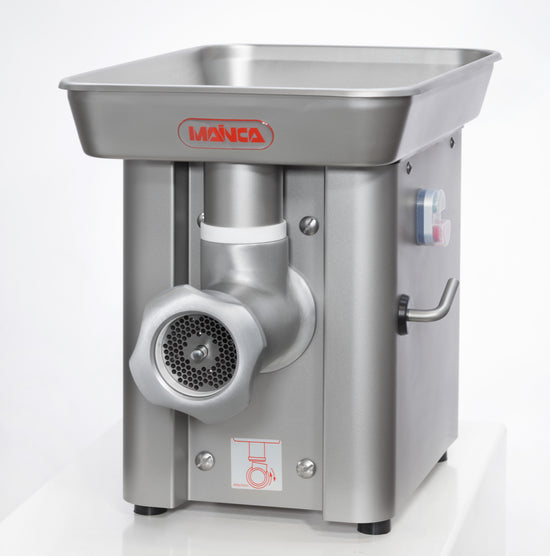
- Larger mincers: Consider batch sizes, handling time and the chilled storage available before and after mincing.
- Meat mixers: Allow for ingredient handling, cleaning according to the manufacturer’s instructions and controls to prevent allergen cross-contact between recipes.
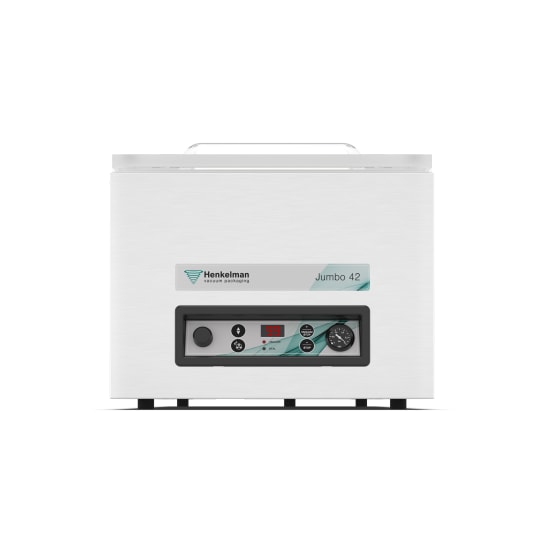
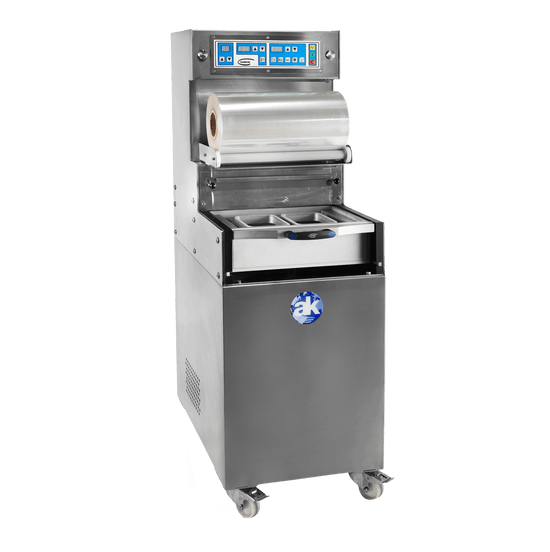
- Vacuum packers and tray sealers: Compare capacity, pack format and suitability for your products. Establish an appropriate shelf life for the product, process, packaging and storage conditions; do not assume a new machine automatically makes a longer shelf life safe.
- Premises: Check storage, staff working space and cleaning access. Where raw and ready-to-eat foods are handled, ensure the layout and working procedures prevent cross-contamination.
Before investing in a larger production setup, confirm the registration or approval requirements with the relevant authority. Contact SMS Food to discuss mincers, mixers, and packing equipment suited to your products, workload, and available space.